If you are new to crypto in the United States, odds are Coinbase is the first exchange anyone will recommend. It is publicly listed, tightly regulated, insured up to nine figures, and now sits at a record 10.3% share of global crypto spot trading. But Coinbase is also famous for one thing traders love to hate: fees. So is the biggest US exchange actually worth using in 2026, or is it just the safest place to overpay?
This Coinbase review breaks down the platform’s fees, features, security, staking yields, and the split personality between the simple Coinbase app and Coinbase Advanced Trade. If you want the fast answer, jump to the verdict. Otherwise, keep reading for the full picture, including where Coinbase quietly became one of the most feature-rich exchanges on the market.
TL;DR: Quick Verdict
Rating: 4.3 / 5
Coinbase in 2026 is the best regulated on-ramp in the US, with a genuinely strong pro trading product (Advanced Trade) hidden behind an expensive beginner app. Use the simple interface only for onboarding and one-off buys. Move to Advanced Trade, or subscribe to Coinbase One, and the fees drop by 75 to 95%. Security, liquidity, and product depth are best in class. If you value regulation and insurance over the absolute lowest fee, Coinbase is the safe default.
What Is Coinbase in 2026?
Coinbase (NASDAQ: COIN) is a US-headquartered cryptocurrency exchange founded in 2012. In 2026 it serves roughly 120 million users worldwide, with about 8.7 million monthly transacting users and more than 1 million paid Coinbase One subscribers. The company processes around $516 billion in quarterly trading volume across spot, futures, and perpetual-style contracts, and holds an estimated 65% of the US crypto trading market.
The platform now supports 275+ digital assets and has expanded well beyond a simple buy-and-sell app. In 2026 alone, Coinbase added CFTC-regulated perpetual-style futures with up to 10x leverage on major coins, launched 24/7 stock index perpetuals with USDC settlement at up to 20x, and rolled out copper and platinum commodity futures. It also runs a self-custody wallet, an on-chain L2 (Base), and Coinbase Prime for institutions.
If you are comparing centralized exchanges more broadly, our Binance vs Coinbase breakdown looks at how it stacks up against the largest global venue, while Kraken vs Bitget covers two strong alternatives.
Product Overview: Two Interfaces, One Exchange
The single most important thing to understand about Coinbase is that it is really two products stitched together.
- Coinbase (simple): the beginner-friendly app and site. Instant buys, recurring purchases, staking with one tap, and a card-swipe simple UX. Fees are high because they hide inside a spread.
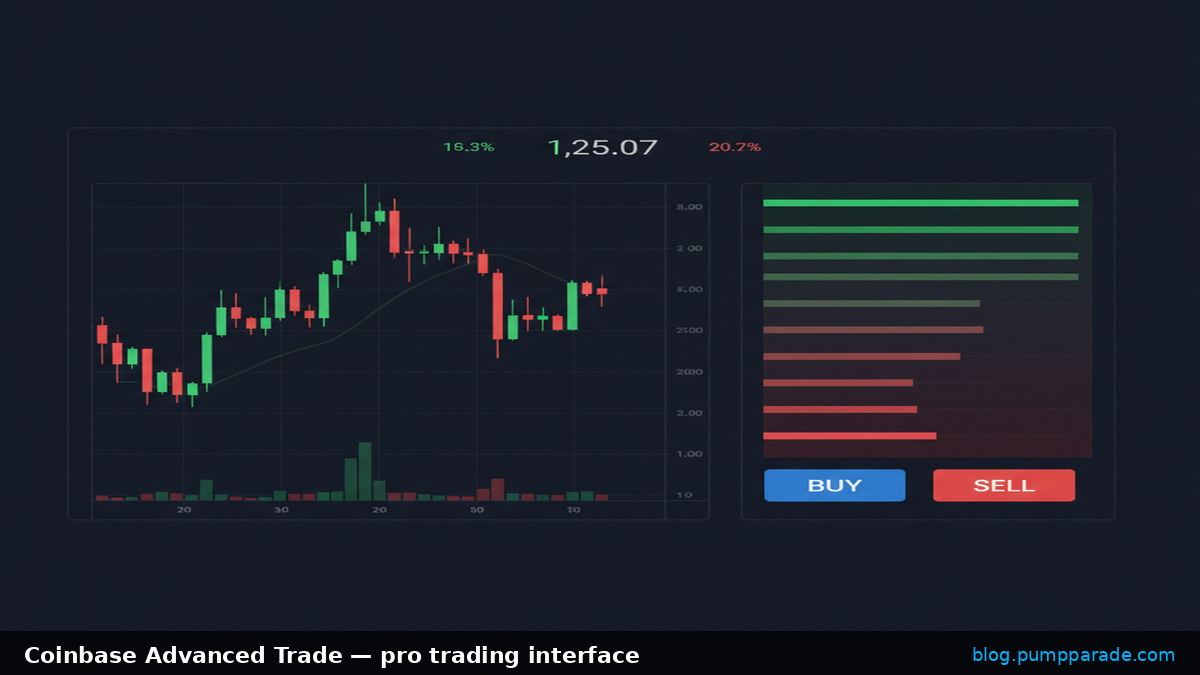
- Coinbase Advanced Trade: the pro interface, formerly Coinbase Pro. Real order books, maker-taker fees, TradingView charts, limit and stop orders, and full API access. Same accounts, same balances, same custody, dramatically lower fees.
Both share the same login, KYC, wallet, and asset universe. You can toggle between them freely inside the app.
Coinbase Fees in 2026: The Full Breakdown
Fees are where Coinbase reviews live or die. Here is the honest picture.
Coinbase Simple (the app)
The consumer interface charges between 1.49% and 3.99% per trade, plus an embedded spread of roughly 0.50%. Card purchases can hit closer to 3.99% total. This is the default experience for a new user, and it is where the “Coinbase is expensive” reputation comes from. For a $5,000 Bitcoin purchase on Simple, expect to pay $125 to $175 all-in.
Coinbase Advanced Trade
Advanced Trade uses a real maker-taker schedule from 0.00% to 0.40% on the maker side and 0.05% to 0.60% on the taker side, with no hidden spread. The base taker fee is 0.60% and drops as your 30-day volume increases. That same $5,000 Bitcoin purchase, executed as a market order on Advanced, costs roughly $30. As a limit order that provides liquidity, it can cost zero.
Switching from Simple to Advanced typically saves 75 to 95% on trading costs. If you take one thing from this Coinbase review, let it be this.
Coinbase One
Coinbase One is the exchange’s subscription tier. It eliminates trade-related fees on eligible pairs, includes account protection guarantees for eligible US users up to $1 million, and unlocks boosted staking rewards. Pricing runs from $4.99 per month (Basic) up to premium tiers reaching $299.99 per month for high-volume traders. For anyone trading more than a few thousand dollars a month on the simple interface, One pays for itself quickly.
Other Coinbase Fees to Know
- ACH deposits/withdrawals: free in the US
- Wire transfers: $10 in, $25 out
- Debit card buys: up to 3.99%
- USDC deposits/withdrawals: free on Base and Ethereum L2s
- Staking commission: 15% to 35% depending on the asset
Features Deep Dive
Spot Trading
Coinbase supports 275+ tokens across BTC, ETH, SOL, USDC, and long-tail alts. Order book depth on majors is deep enough for six- and seven-figure trades without meaningful slippage. Advanced Trade offers market, limit, stop-limit, and bracket orders, with TradingView charts baked in.
Futures and Perpetual-Style Contracts
Coinbase Financial Markets runs CFTC-regulated perpetual-style futures on major coins with up to 10x leverage. In June 2026, Coinbase launched 24/7 stock index perpetuals settled in USDC at up to 20x. It also added copper and platinum commodity futures in January. This is a serious derivatives product that quietly competes with offshore venues while staying US-regulated.
Staking
Coinbase Staking supports Ethereum, Solana, Cardano, Polkadot, Cosmos, Tezos, and several others, with typical yields of 2% to 7% APY after commission. Ethereum stakers receive cbETH, a liquid staking token they can move or use as collateral elsewhere. There is no minimum, no node to run, and rewards accrue automatically. Coinbase’s commission is on the higher side (15 to 35% of rewards), which is the tradeoff for the plug-and-play experience.
Coinbase Wallet (Self-Custody)
Separate from the exchange, Coinbase Wallet is a non-custodial mobile and browser wallet supporting hundreds of chains including Ethereum, Base, Solana, and every major EVM L2. It integrates cleanly with DeFi, NFTs, and Base dapps. If you also want a pure Solana wallet, our Phantom Wallet review is a good next read.
Base L2
Base is Coinbase’s Ethereum layer 2 built on the OP Stack. In 2026 it is one of the top three L2s by TVL and daily active users, with sub-cent fees and instant Coinbase on-ramps. Any USDC on Coinbase can be moved to Base in one click at zero cost, which makes Coinbase a genuinely attractive DeFi entry point.
Coinbase Prime and Institutional
Coinbase Prime handles custody, trading, and financing for hedge funds, ETFs, and corporates. It is the custodian for the majority of the US spot Bitcoin ETFs. This institutional plumbing is what underpins the exchange’s global 10.3% share number.
Pros and Cons
Pros
- Best-regulated large exchange in the US, publicly listed, quarterly audited
- Deep liquidity on majors, tight spreads on Advanced Trade
- 275+ assets including full altcoin coverage
- Advanced Trade fees genuinely competitive with any global venue
- Base L2 gives cheap, native access to on-chain DeFi
- CFTC-regulated futures and 24/7 stock perpetuals under one login
- Strong staking product with liquid cbETH option
- Zero successful hacks since 2012, $320M insurance, 98% cold storage
Cons
- Simple app fees are punishingly high (1.49 to 3.99% plus spread)
- Staking commissions (15 to 35%) are higher than direct liquid-staking protocols
- Not available in every US state for every product (futures, staking coverage varies)
- Customer support has historically been slow, though Coinbase One improves this
- Simple and Advanced split can confuse new users who never discover Advanced
Security and Regulation
Coinbase is arguably the most regulated large crypto exchange on earth. It holds money transmitter licenses across all US states where it operates, a NY BitLicense, MiCA authorization in the EU, and a growing list of international licenses. Coinbase Financial Markets is CFTC-registered for derivatives.
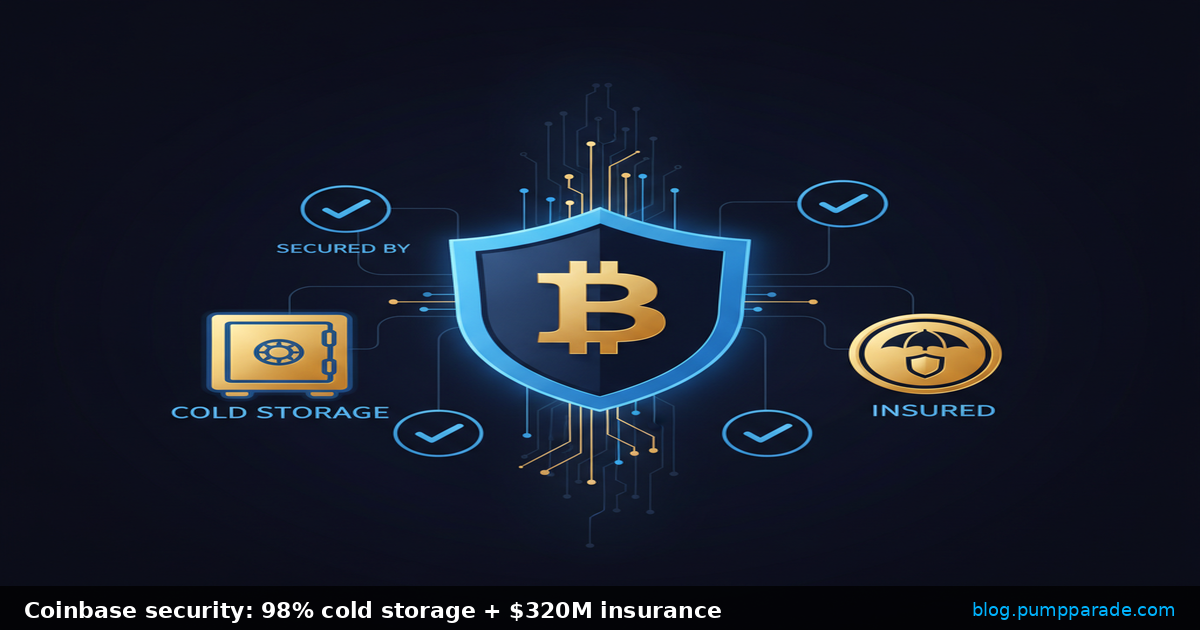
On the security side, Coinbase keeps 98% of customer funds in cold storage, maintains $320 million in insurance coverage against theft, and has recorded zero successful exchange-level hacks since launching in 2012. The platform enforces 2FA, biometric login, address allow-lists, and passkey support. For paranoid users, Coinbase Vault adds time-delayed withdrawals with multi-approver flows.
User Experience
The consumer app is polished. Onboarding takes minutes, KYC is fast for US users with a driver’s license, and buying your first crypto genuinely does feel like a fintech app. The Advanced Trade interface is a full pro terminal with TradingView charts, a proper order book, and every order type you would expect. Both are available on iOS, Android, and web.
Mobile users get near-parity with the web platform. The one common complaint remains customer support: expect chat and email replies measured in days rather than minutes unless you are a Coinbase One or Prime customer.
How Coinbase Compares
Against Binance, Coinbase loses on fees and altcoin breadth but wins on regulation, US access, and derivatives that a US person can actually legally use. Against Kraken, Coinbase wins on product depth (Base, cbETH, stock perpetuals) but Kraken is often cheaper on smaller trades. Against Bybit and OKX, Coinbase loses on advanced perp features but wins for anyone who wants a US-regulated, publicly audited counterparty. If you need help picking between exchanges, our Bybit vs OKX comparison is a good follow-up read.
Who Should Use Coinbase?
- US beginners: yes, but subscribe to Coinbase One or move to Advanced Trade immediately.
- Active US traders: yes for spot, yes for regulated futures, especially with the 24/7 stock perps.
- DeFi users: yes as a fiat on-ramp to Base, cbETH, and USDC.
- International low-fee traders: probably no, cheaper venues exist outside the US.
- Ultra low-fee memecoin traders: no, on-chain aggregators are cheaper for long-tail alts.
Final Verdict
Coinbase in 2026 is a much better exchange than its reputation suggests, provided you know where to click. The simple app is overpriced. Advanced Trade, Coinbase One, and Base are genuinely competitive with anything on the market and are wrapped in the strongest regulatory and insurance package in the industry.
Rating: 4.3 / 5. The best regulated home base for US crypto users, and a legitimately good pro exchange once you leave the beginner interface. Visit Coinbase to open an account, and switch to Advanced Trade as soon as you deposit.
FAQ
Is Coinbase safe in 2026?
Yes. Coinbase holds 98% of customer funds in cold storage, carries $320 million in theft insurance, is publicly audited as a NASDAQ-listed company, and has never suffered a successful exchange-level hack since launching in 2012.
Why are Coinbase fees so high?
They are high only on the simple consumer interface, which charges 1.49 to 3.99% plus a spread. Switching to Coinbase Advanced Trade drops fees to a 0.00 to 0.60% maker-taker schedule, saving most users 75 to 95%.
Is Coinbase One worth it?
If you trade more than roughly $1,000 to $2,000 per month on the simple app, yes. Coinbase One eliminates trade fees on eligible pairs, adds up to $1 million in account protection for eligible US users, and boosts staking rewards. Basic tier is $4.99 per month.
Does Coinbase support staking?
Yes. You can stake ETH, SOL, ADA, DOT, ATOM, XTZ, and others directly in the app with no minimum. Yields typically range from 2% to 7% APY after Coinbase’s commission of 15 to 35%.
Can I use Coinbase for DeFi?
Yes. Coinbase Wallet is a self-custody wallet supporting Ethereum, Solana, and every major EVM L2. Base, Coinbase’s own L2, plugs directly into the exchange with instant USDC transfers and sub-cent fees.