
Solana’s liquidity layer has split into two very different camps. On one side sits Orca, the clean, approachable AMM that popularized concentrated liquidity on Solana through its Whirlpools. On the other sits Meteora, the power-user playground built around DLMM bins, dynamic fees, and a yield layer that funnels idle LP capital into external lending protocols. Both are pure Solana plays, both routinely rank among the top three sources of on-chain liquidity on the network, and both want your TVL in 2026. So which one actually delivers better returns, a cleaner trading experience, and the right mix of tools for your use case? This is the head-to-head.
TL;DR: Which Wins in 2026?
Both Orca and Meteora are excellent, but they serve different crowds. If you want a clean interface, battle-tested Whirlpools, and set-and-track LP positions without a spreadsheet, Orca is the easier call. If you are a sophisticated LP chasing capital efficiency, memecoin launch volume, and yield stacked on top of your trading fees, Meteora’s DLMM and Dynamic AMM pools pull ahead.
- Best for beginners and swappers: Orca
- Best for active LPs and yield farmers: Meteora
- Best for new token launches: Meteora (Memecoin Pools)
- Best for low slippage on majors: Orca Whirlpools
Orca Overview

Orca launched in 2021 as a user-friendly alternative to the then-dominant Serum order book experience, and it has grown into one of Solana’s core liquidity primitives. The protocol describes itself as “Solana’s premier liquidity layer,” and the numbers back it up: DeFiLlama puts Orca’s current TVL at roughly $291 million, with a small outpost on Eclipse. Its flagship product is Whirlpools, Orca’s take on concentrated liquidity. LPs pick a price range for their capital, which lets a smaller deposit do more work than a full-range position on a classic AMM.
Orca is governed by the ORCA token, and 20% of protocol fees are used for ORCA buyback and burn, which has turned Orca into one of the more deflationary DEX tokens on Solana. Non-custodial wallets like Phantom, Solflare, Backpack, and Ledger all plug in without friction. The UI is widely considered the most polished of any Solana DEX.
Meteora Overview
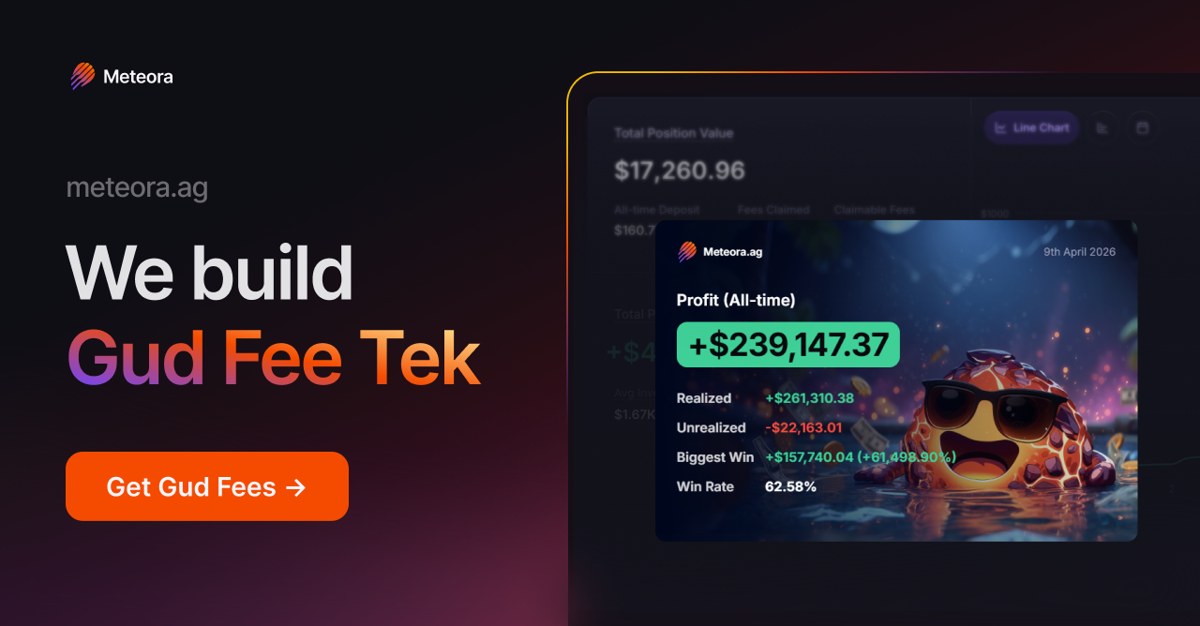
Meteora is the rebranded and expanded version of what used to be Mercurial Finance, and it has become the go-to home for sophisticated Solana LPs. Its current TVL sits at about $258 million, but the interesting number is the flow: Meteora processed $32 billion in H1 2026 trading volume and paid out $140 million in LP fees over the same stretch. That is an eye-watering fee-to-TVL ratio compared with most AMMs on the network.
Meteora offers three main pool types. DLMM (Dynamic Liquidity Market Maker) pools break the price range into discrete bins and use dynamic fees that scale with volatility. Dynamic AMM pools work like a classic constant product pool but route idle capital into external lending protocols such as Kamino and marginfi, so LPs earn trading fees plus lending yield. Memecoin Pools are a specialized flavor of Dynamic AMM with features built for token launches, including permanently lockable liquidity and a dynamic fee schedule.
Features Deep Dive
Orca: Whirlpools, Vaults, and Guardrails
Orca’s Whirlpools are the cleanest implementation of concentrated liquidity on Solana. LPs pick a tight or wide price band, and the protocol automatically concentrates capital inside that range. Orca also ships a Fair Price Indicator that flags when a swap is pricing significantly off the market, a Magic Bar one-click swap flow for newcomers, and Double Dip pools that reward LPs in ORCA plus a partner token. New in 2025 and 2026, Orca Vaults automate common LP strategies so passive users can earn concentrated-liquidity yields without actively managing their positions.
Meteora: DLMM, Dynamic AMM, and the Yield Layer
Meteora’s headline feature is DLMM. Instead of a continuous curve, liquidity sits in discrete price bins, each with its own reserve of tokens. Swaps inside an active bin incur zero price impact, and dynamic fees automatically rise during volatile periods so LPs capture more revenue when volume spikes. Dynamic AMM pools are the more passive option: capital is routed through yield-earning vaults into lending protocols when not needed for a swap, which stacks a second income stream on top of trading fees. Memecoin Pools, launched to serve the pump.fun and launchpad economy, let token creators lock liquidity permanently and still claim trading fees from it.
Fees & Pricing
Fee structures are where the two protocols diverge the most. Orca keeps things tiered and predictable. Meteora leans into dynamism.
Orca fee tiers:
- Whirlpools: 0.01%, 0.02%, 0.04%, 0.05%, 0.1%, 0.2%, 0.3%, 0.65%, 1%, and 2% tiers available depending on pool
- Legacy constant product pools: flat 0.3% per swap
- ORCA burn: 20% of protocol fees are used to buy back and burn ORCA
Meteora fee structure:
- DLMM pools: dynamic fees from 0.01% to 2%, rising automatically with volatility
- Dynamic AMM pools: fixed fees typically between 0.25% and 0.30%
- Memecoin Pools: dynamic fee schedule tailored to launch volatility
- Additional yield: Dynamic AMM pools earn lending interest on idle reserves
In practice, Orca is usually cheaper for swappers on blue-chip pairs like SOL/USDC. Meteora’s dynamic fees can get expensive during volatile launches but reward LPs much more generously in the same moments.
Comparison Table
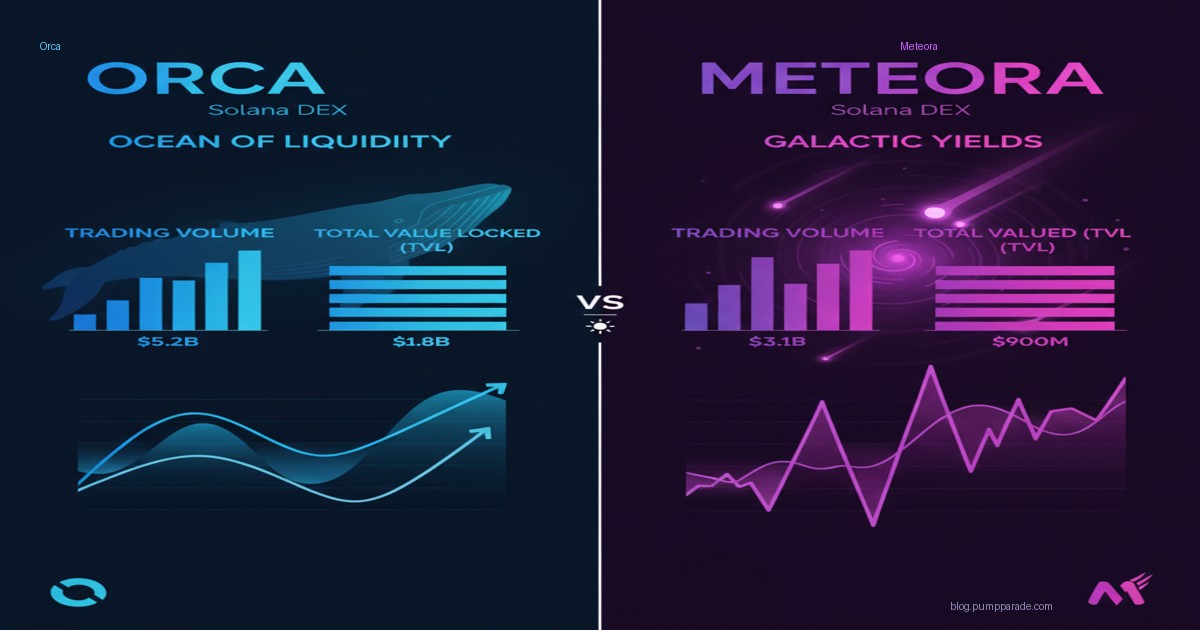
| Feature | Orca | Meteora |
|---|---|---|
| Chain | Solana (primary), Eclipse | Solana |
| TVL (Nov 2026) | ~$291M | ~$258M |
| Pool Types | Whirlpools, Vaults, legacy constant product | DLMM, Dynamic AMM, Memecoin Pools |
| Swap Fees | 0.01% to 1% (tiered) | 0.01% to 2% (dynamic) + 0.25%-0.30% AMM |
| Slippage | Low on majors | Zero within active bin |
| LP Management | Range-based, Vaults automate | Active (DLMM) or passive (Dynamic AMM) |
| Yield Stack | Trading fees only | Trading fees + lending yield |
| Memecoin Support | All SPL tokens | Dedicated Memecoin Pools with lockable liquidity |
| Token | ORCA (20% fee burn) | MET (staking, referrals) |
| Best For | Swappers, passive LPs | Active LPs, token launches, yield farmers |
Security & Trust
Both DEXs have undergone multiple independent audits. Orca’s Whirlpools program was audited by Kudelski Security and Neodyme, and the protocol has a long public operating history going back to September 2021. There have been no material exploits of Orca’s core contracts.
Meteora’s contracts, including DLMM and Dynamic AMM, have also been audited, most notably by Offside Labs and Sec3. The additional surface area from Meteora’s Dynamic AMM integrations with external lending protocols introduces smart-contract risk that Orca’s purer AMM design avoids, but Meteora discloses those integrations transparently in its docs. Both protocols are fully non-custodial, which means you always hold your own keys and signing happens in your wallet. If you are still picking a wallet, our Backpack vs Solflare comparison breaks down the best options for Solana DeFi.
User Experience
Orca wins the UX battle, and it is not particularly close. The interface is uncluttered, the swap flow is one or two clicks, and even first-time users can open a Whirlpool position without reading the docs. Mobile support through Phantom and Backpack is smooth.
Meteora is powerful but denser. The DLMM interface asks you to think about bin width, strategy shape (Spot, Curve, Bid-Ask), and active bin positioning before you deposit. Advanced LPs love the control. Beginners will likely feel lost without going through Meteora’s LP Army educational content first. Mobile is functional via Phantom and Jupiter Mobile but not where the product shines.
Pros & Cons
Orca
Pros
- Cleanest, most beginner-friendly UI on Solana
- Deep liquidity on blue chips like SOL, USDC, and jitoSOL
- Tiered fee structure makes costs predictable
- Vaults automate concentrated-liquidity strategies for passive LPs
- ORCA buyback and burn adds tokenholder value accrual
- Strong audit history and no major exploits
Cons
- Smaller TVL and volume on long-tail pairs compared with Meteora and Raydium
- No lending-yield stacking: LPs earn trading fees only
- Launch-pad economy flows mostly to Meteora instead
- Still requires some active management outside of Vaults
Meteora
Pros
- DLMM delivers best-in-class capital efficiency when managed well
- Dynamic fees capture outsized revenue during volatility
- Dynamic AMM pools stack lending yield on top of trading fees
- Memecoin Pools dominate the launchpad liquidity flow
- Impressive H1 2026 numbers: $32B volume, $140M LP fees
- Strong integrations with Jupiter aggregator and major Solana launchpads
Cons
- DLMM positions need active management or they go idle
- Lending-protocol dependency adds extra smart-contract risk
- Learning curve is steeper than Orca
- Dynamic fees can spike unexpectedly during volatile periods
Verdict
If you are a casual user who swaps tokens a few times a week and wants to park some capital in an LP position without babysitting it, Visit Orca. The UX, predictable fees, and Vaults product make it the right default for the majority of Solana users.
If you are an active LP who understands concentrated liquidity, wants to capture volatility premiums, or you are launching or trading new tokens with real volume, Visit Meteora. The DLMM model, dynamic fees, and yield-layer integrations make it the most capital-efficient AMM on Solana right now, and the fee flow shows LPs are being paid for the complexity.
Our ratings:
- Orca: 4.5 / 5. Best-in-class UX, slightly behind on LP returns and launch flow.
- Meteora: 4.5 / 5. Best-in-class LP returns and launch flow, slightly behind on UX.
Both are top-tier protocols. Pick based on what you optimize for: ease or yield.
FAQ
Is Orca or Meteora cheaper to swap on?
For SOL/USDC and other blue-chip pairs, Orca is usually cheaper thanks to its 0.01% to 0.04% Whirlpool tiers. For volatile memecoins and new launches, Meteora can be more expensive during peak volatility but often has deeper liquidity.
Which protocol pays LPs more?
Measured by fee-to-TVL ratio, Meteora pays LPs more in aggregate, largely because its dynamic fees and Dynamic AMM lending yield stack two revenue streams. Orca LPs earn trading fees only. For active LPs, Meteora typically wins. For set-and-forget capital, the gap narrows.
Can I use Orca and Meteora with the same wallet?
Yes. Both support Phantom, Solflare, and Backpack. Meteora also supports Jupiter Mobile, and Orca adds Ledger hardware wallet support out of the box.
Which DEX has better security?
Both have multiple independent audits and clean operating histories. Orca has the simpler attack surface because it is a pure AMM. Meteora’s Dynamic AMM pools inherit smart-contract risk from the external lending protocols they integrate with, which is clearly disclosed in the Meteora docs.
Do Orca and Meteora have their own tokens?
Yes. Orca has the ORCA token, which captures 20% of protocol fees through a buyback-and-burn program. Meteora has the MET token, which powers staking, referrals, and governance. Neither is required to swap or provide liquidity.