If you hold any serious amount of crypto, the question is no longer should I use a hardware wallet, it is which one. And in 2026, that almost always means a choice between two names: Ledger and Trezor. Between them they cover the vast majority of cold-storage devices in circulation, and they have spent more than a decade trading punches over security, design, and supported coins.
So which one should you actually buy this year? We took both ecosystems apart, compared the full current line-up, weighed the security trade-offs, and looked at how each one behaves day-to-day for typical Solana, EVM, and Bitcoin users. Here is the full breakdown.
TL;DR: Quick Verdict
Buy a Trezor Safe 5 ($169) if you value fully open-source hardware and software, want a modern color touchscreen, and your portfolio is mostly Bitcoin, Ethereum, major altcoins, and Solana. It is the sweet-spot device of 2026.
Buy a Ledger (Nano X $149, Flex $249, or Stax $399) if you want the widest possible coin support (5,500+), the smoothest mobile experience over Bluetooth, deep DeFi and NFT integrations, and you are comfortable trusting a closed-source secure element.
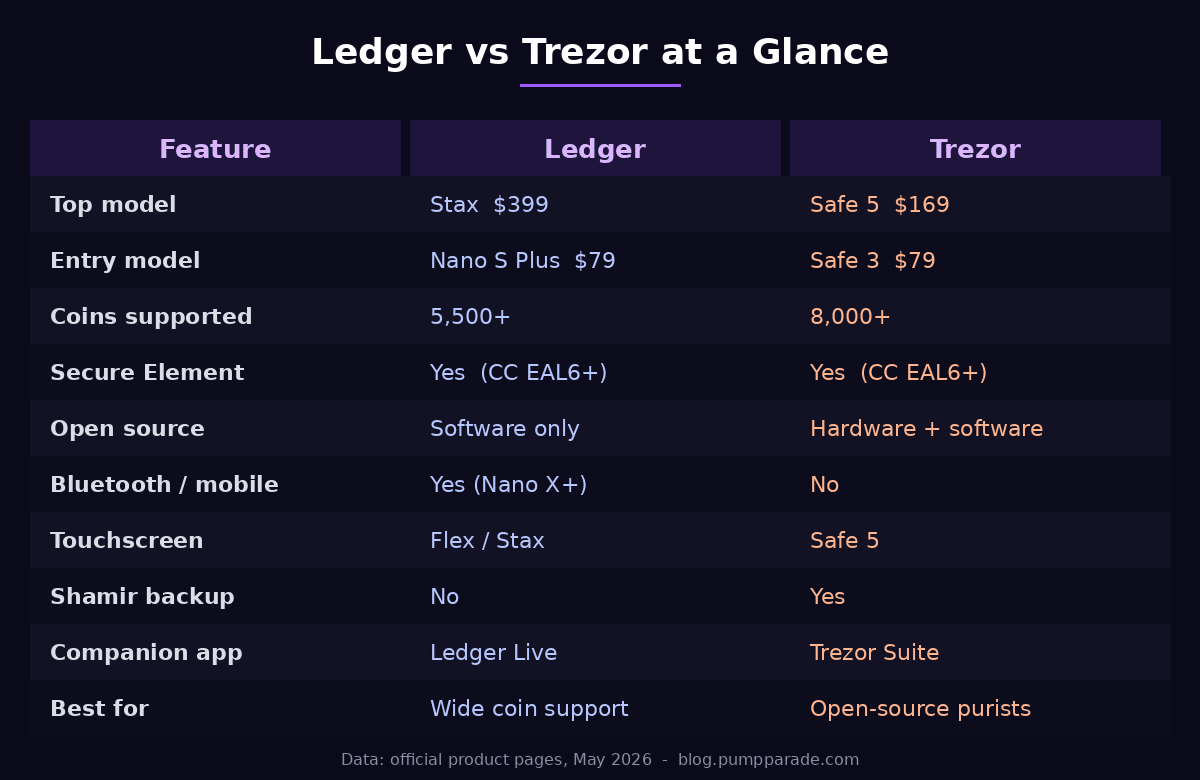
If you only need basic cold storage and price is the deciding factor, the Ledger Nano S Plus and the Trezor Safe 3 are tied at $79. The Trezor wins on open-source, Ledger wins on raw coin count and DeFi-app integration.
Ledger vs Trezor: At a Glance
Both brands have done genuine work since 2024. Ledger filled out the middle of its lineup with the Flex and refreshed its top end with the Stax. Trezor consolidated around the Safe 3 and Safe 5, retired the long-running Model One and Model T, and added a Certified EAL 6+ secure element to its full current range, addressing the loudest historical criticism of the brand. The result is two product families that are closer in raw security than at any point in the past, but still very different in philosophy.
The 2026 Lineups
Ledger
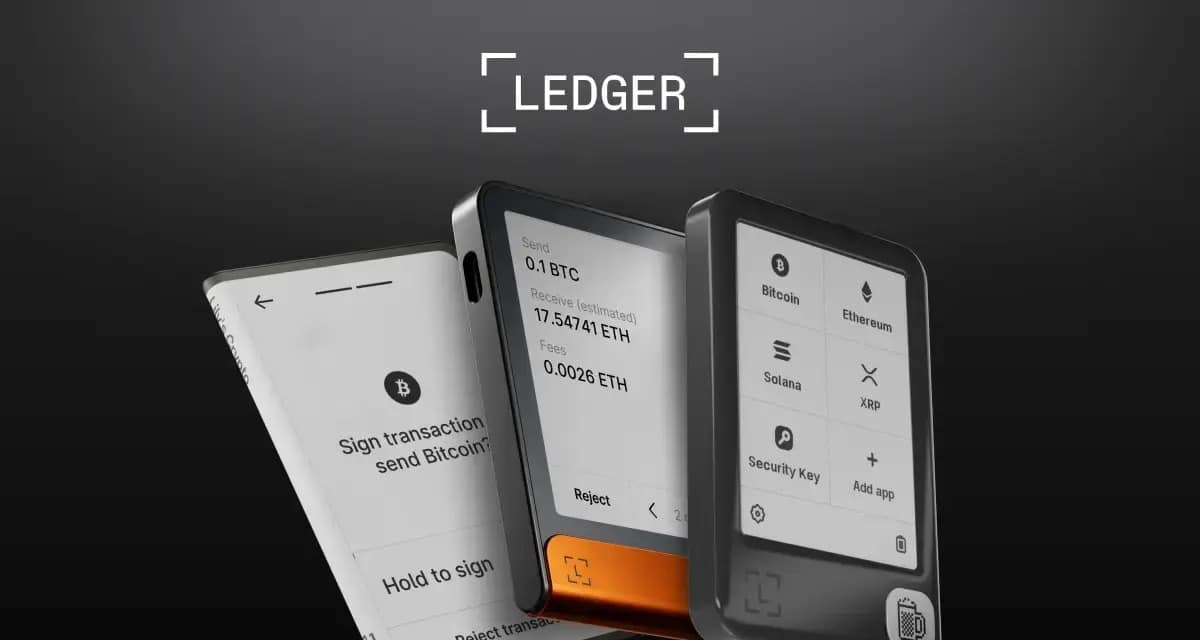
The Ledger 2026 lineup: Nano S Plus, Nano X, Nano Gen5, Flex, and Stax. Image: ledger.com.
Ledger now sells five mainline devices: the entry-level Nano S Plus ($79), the Bluetooth-enabled Nano X ($149), the newer Nano Gen5 ($179), the mid-tier touchscreen Flex ($249), and the flagship Stax ($399). All of them use Ledger’s signature dual-chip architecture, with a STMicroelectronics ST33 series Certified EAL6+ secure element holding the keys and signing transactions, paired with a general-purpose MCU for the screen and connectivity. The Flex and Stax add a curved E Ink touchscreen that displays transaction details and addresses in a much larger format, which is a meaningful security feature, not just a cosmetic upgrade.
On the software side, the Ledger Live app handles portfolio tracking, staking for assets like SOL and ETH, swaps via partners, and a growing NFT module. Ledger also leans hardest on third-party app support, with native integrations across MetaMask, Phantom, Rabby, Solflare, Uniswap, Aave, and most major DeFi front-ends.
Trezor
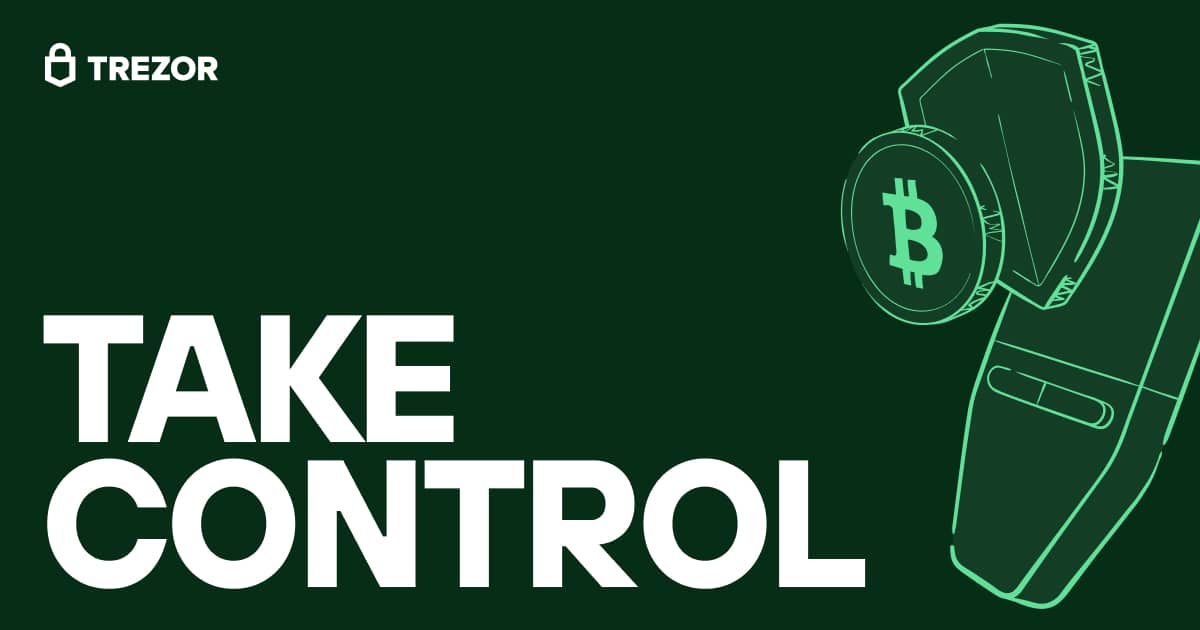
The Trezor product family in 2026: Safe 3 and Safe 5 with EAL 6+ secure elements. Image: trezor.io.
Trezor’s current line is simpler: the Safe 3 ($79) and the Safe 5 ($169). The Model One and Model T are no longer in production. Both Safe devices ship with a CC EAL 6+ certified secure element, which is critical because earlier Trezor devices were famously secure-element-free and therefore vulnerable to certain physical attacks. The Safe 3 keeps the classic two-button design and a small monochrome OLED, while the Safe 5 introduces a 1.54-inch color touchscreen with haptic feedback and the same EAL 6+ chip.
The companion app, Trezor Suite, handles send, receive, swaps, Tor routing for privacy, and coin control for Bitcoin. Suite is more focused than Ledger Live, but it is fully open-source, which matters to a meaningful slice of self-custody users.
Security: Same Chip, Different Philosophy
For years the easy answer was “Ledger has a secure element, Trezor does not”. That is no longer true. As of the Safe 3 and Safe 5, Trezor uses the same class of CC EAL6+ secure element that Ledger does. So both wallets now generate and store private keys inside a hardened chip designed to resist physical extraction.
The interesting differences are in how each company uses that hardware.
Ledger’s architecture keeps the secure element involved in almost every step, including screen rendering on the newer Flex and Stax. The trade-off is that the secure element firmware is closed-source, and the company controls the supply chain end to end. Ledger also offers an opt-in cloud recovery service, Ledger Recover, where shards of your seed phrase are split between custodians. It is genuinely optional, but the controversy around its launch in 2023 still colors community opinion.
Trezor’s architecture uses the secure element for PIN and seed protection while keeping the general firmware and host code fully open-source. That means independent researchers can audit the entire stack, and a determined user can build firmware from source. Trezor also supports Shamir Backup on the Safe 5, splitting your seed into up to 16 shares with a configurable threshold. For users who want institutional-style key handling without buying institutional gear, Shamir is the single biggest security feature on either device.
Neither device has been broken remotely in normal use. Both have had physical-attack research published against older models. If your threat model is “screen of my exchange got compromised and I want my coins offline”, both are more than enough. If your threat model is “evil maid with a $10,000 lab”, read each company’s research disclosures carefully before picking.
Supported Coins and Networks
This is where the numbers diverge, and the headline number is misleading.
Ledger advertises 5,500+ supported coins and tokens. Trezor advertises 8,000+. Both numbers are real, but they count different things. Ledger’s number tends to include long-tail EVM tokens that work through the device’s signing layer plus a partner app. Trezor’s number includes most ERC-20s and SPL tokens routed through Trezor Suite or third-party wallets like MetaMask and Phantom. In practice:
- Bitcoin, Ethereum, Solana, BNB Chain, Polygon, Arbitrum, Base, Optimism: Both fully support these networks.
- Cosmos ecosystem (ATOM, OSMO, INJ, TIA), Cardano, Polkadot, Tron, Ripple: Ledger has broader native app coverage. Trezor supports most via Trezor Suite or third-party wallets, but the integration is less polished.
- NFTs (Solana and EVM): Ledger has the smoother experience, especially via Ledger Live or Phantom and MetaMask integrations. Trezor users typically rely on third-party wallets.
- DeFi (Aave, Uniswap, Jupiter, Drift, Kamino): Both work through MetaMask, Rabby, Phantom, or Solflare. Ledger has slightly tighter first-party UX on EVM DeFi.
If you live mostly on Bitcoin, Ethereum, Solana, and major L2s, you will not feel the coin-count gap. If you are deep into Cosmos or have a long tail of obscure tokens, Ledger pulls ahead.
Comparison Table
User Experience
Ledger Live and the mobile story
Ledger has the better mobile experience, full stop. Bluetooth on the Nano X, Flex, and Stax lets you sign transactions from an iPhone or Android phone without a cable, which sounds like a small thing until you have done it for the third time on a Monday morning. Ledger Live on iOS is a first-class app, with full portfolio tracking, on-device staking for SOL and ETH, swaps, and NFT browsing. The newer Flex and Stax touchscreens make on-device address verification much easier than the older Nano S Plus.
The downsides: Ledger Live’s swap and buy flows are powered by third-party partners with their own fees and KYC requirements, which can be jarring if you are used to direct DEX access. Some users also still avoid Ledger Recover entirely. It is fully opt-in and disabled by default, but the brand has not entirely recovered the trust it spent in the original launch.
Trezor Suite and the desktop story
Trezor Suite is more focused, less flashy, and arguably more pleasant to use day-to-day for the technical user who wants to know exactly what their wallet is doing. Coin control, replace-by-fee, Tor routing, and CoinJoin support for Bitcoin are first-party features. On the Safe 5, on-device confirmations on the color touchscreen are excellent, easily as readable as the Ledger Flex.
The big trade-off is mobile. Trezor Suite Lite for Android is a watch-only companion app, not a full signing app. For iOS, there is no first-party signing experience at all, which is a real limitation if you want to sign DeFi transactions from your phone. If you live on the desktop, this is irrelevant. If you live on mobile, it matters.
Pros and Cons
Ledger
Pros
- 5,500+ supported coins, including the broadest native app library on the market
- Bluetooth and a real mobile experience on iOS and Android
- E Ink touchscreens on Flex and Stax that materially improve transaction verification
- Deep integrations with MetaMask, Phantom, Rabby, Solflare, and most DeFi front-ends
- Dual-chip architecture with a secure element involved in signing and display
Cons
- Secure element firmware is closed-source
- Ledger Recover still divides the self-custody community, even as an opt-in
- No Shamir Backup option
- Top model (Stax) is expensive at $399
Trezor
Pros
- Fully open-source hardware and software across the current line
- CC EAL 6+ secure element on both Safe 3 and Safe 5
- Shamir Backup on Safe 5 for institutional-style key splitting
- Tor, coin control, CoinJoin, and replace-by-fee built into Trezor Suite
- Safe 5 color touchscreen and haptics are excellent for the $169 price
Cons
- No Bluetooth and no full iOS signing app
- Fewer first-party coin integrations beyond the major networks
- NFT and DeFi UX usually goes through a third-party wallet
- Suite is desktop-first, which is a real limitation in 2026
Which One Should You Buy?
For most Solana and EVM users who care about open source: Trezor Safe 5. The Safe 5 lands the modern features that used to live only on the Ledger flagship, at less than half the price of a Stax, with a full open-source stack and Shamir Backup. If your phone is not your main wallet client, it is the easiest recommendation in the category.
For mobile-first users and heavy DeFi traders: Ledger Flex. At $249, the Flex gives you the larger touchscreen and the full Bluetooth and iOS experience without paying Stax money. Pair it with Phantom for Solana and MetaMask or Rabby for EVM and you have a setup that covers basically every chain that matters in 2026.
For maximalist DeFi and NFT users with a five-figure portfolio: Ledger Stax. The 3.7-inch E Ink screen genuinely changes how you verify transactions, and Ledger Live plus the third-party app ecosystem is the broadest available. If your portfolio justifies $399 of cold storage, the Stax is the most polished device on the market.
For first-time hardware wallet buyers: Trezor Safe 3 or Ledger Nano S Plus. Both are $79. Pick the Safe 3 if you want open-source and Bitcoin-heavy use. Pick the Nano S Plus if you want broader DeFi compatibility out of the box.
Where This Fits in Your Stack
A hardware wallet is one piece of a wider self-custody setup. If you are still relying on a centralized exchange for the bulk of your holdings, we ran a detailed look at the trade-offs in Bybit vs OKX: Best Crypto Exchange 2026. For software wallets on Solana that pair cleanly with either Ledger or Trezor, see our Phantom vs Backpack comparison. And if you want to put your cold-stored SOL to work via liquid staking, the breakdown in Marinade vs Jito is the easiest place to start.
FAQ
Are Ledger and Trezor still safe in 2026?
Yes. Both ship CC EAL 6+ secure elements, both have public bug bounty programs, and neither has been remotely compromised in normal use. The main risk for both is user error: phishing, signing blind transactions, and writing your seed phrase down in unsafe places. The device is only as good as the operational security around it.
Can I use Ledger or Trezor with Phantom or MetaMask?
Yes for both. Phantom supports Ledger natively for Solana and EVM, and supports Trezor for EVM. MetaMask supports both Ledger and Trezor directly. Rabby and Solflare also support both. You sign on the device and broadcast through the software wallet.
What happens if my Ledger or Trezor breaks or gets lost?
You restore from your seed phrase on a new device, either a new Ledger, a new Trezor, or any other BIP39-compatible wallet. The device is just an interface to keys derived from the seed. Trezor users on Safe 5 with Shamir Backup restore from their share threshold. Ledger users without Recover restore from their 24-word seed.
Do I need to verify the device when it arrives?
Always. Buy directly from shop.ledger.com or trezor.io, never from a marketplace reseller. Both companies have published genuineness checks that run on first connect. Run them.
Is the Ledger Stax worth $399?
It is the best hardware wallet experience money can currently buy, and the large E Ink screen genuinely improves transaction verification. But the Trezor Safe 5 gets you a color touchscreen, open-source firmware, and Shamir Backup for $169. For most users, the Stax is a luxury upgrade, not a security upgrade.
Verdict (May 2026): Trezor Safe 5 is the best all-round hardware wallet for self-custody-minded users this year. Ledger Flex is the best pick for mobile-heavy DeFi users. Ledger Stax remains the most polished device if you want the flagship experience and price is not the deciding factor.
Sources: Ledger Academy, Coin Bureau, CoinLedger, BitDegree, official Ledger and Trezor product pages.